If you scan the Northern District of Indiana copyright and trademark indexes, you will keep seeing captions like Plaintiff v. The Partnerships and Unincorporated Associations Identified on Schedule A. That is not a missing name. That is the case. The real defendants – often dozens or hundreds of Amazon, eBay, Temu, or Shopify storefronts – are listed on a sealed exhibit filed with the complaint. Counsel asks for a temporary restraining order, an asset freeze, and leave to serve by email. Many of those defendants never appear. Defaults follow. The docket looks busy but the local story is thin.
These filings started as a Northern District of Illinois habit and migrated. Hammond now sees a regular diet of them. Some are trademark counterfeiting. Some are copyright. The plaintiff is often a brand or a designer with no Indiana office. The “Indiana” connection is venue and a magistrate who will sign a TRO. That is enough for the statute. It is not enough for the kind of post this blog is for.
This site follows named parties, local businesses, university marks, and the occasional food truck that could not sort out a cease-and-desist. A sealed schedule of overseas sellers does not give you that. There is usually no public complaint worth quoting, no Indiana hook beyond the case number, and no answer coming. When a Schedule A filing names a real local defendant or turns into something other than a default mill, it will earn a post. Until then, you will see those captions in the monthly wrap, if at all, and not as a standalone post.
Stay tuned for the cases with names on both sides of the “v.”
As a trademark attorney, I almost always notice whether a company is using the federal registration symbol, ®. From time to time I look the mark up, and there is no registration. Sometimes there is not even an application.
That was the opening of the 2019 version of this post. The rule has not changed, but the mix-ups have gotten more creative.
You may use the ® symbol with a trademark only after the United States Patent and Trademark Office has issued a registration for that mark. Not after you file. Not after the application publishes. Not after an examining attorney issues a notice of allowance. After registration.
Using ® before that can get you into trouble. Knowing and willful misuse can be treated as an attempt to deceive consumers and can support a fraud theory. The USPTO has long said that honest confusion is more common than actual fraud. That is not a license to keep using it anyway.
What the Office still lists as “we hear this a lot”
TMEP §906.02, Improper Use of Registration Symbol, still recognizes the potential for misunderstandings in use of the registration symbol. Here are some common explanations that do not, by themselves, prove fraud:
the printer did not get instructions, or ignored them;
believing that an Indiana state registration, or a foreign registration, authorizes the federal symbol;
the registration covers only part of the brand block on the label;
the registration covers other goods, not these goods;
the registration expired or was cancelled and nobody took the ® off the packaging;
another registered mark on the same label is what the symbol was supposed to refer to.
If your facts sound like one of those, fix the artwork. Do not panic.
TM, SM, and ® are not interchangeable
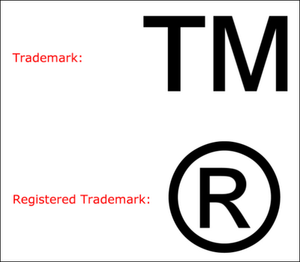
TM means “we claim this as a trademark.” You can use it on an unregistered mark, a pending application, or a common-law use. It is a claim, not a government seal.
SM is the same idea for services.
® means “the USPTO has registered this mark.” It is the only one of the three that requires a live federal registration.
Putting ® on a website footer because the logo “looks official” is how this post keeps getting rewritten.
State registrations do not get you a ®
Indiana will register a trademark through the Secretary of State. That filing has a place. It is not a federal registration. It does not authorize use of the federal symbol. It does not give you nationwide constructive notice. It does not mean the USPTO agrees the mark is clear.
A business can hold an Indiana registration, a pending federal application, and common-law rights in a couple of counties at the same time. Only the federal registration – once it issues – supports ®. The other two support TM or SM, if you want a notice symbol at all.
This blog has already watched local fights where a same-day state filing and a federal application showed up in the same week. Different offices. Different rights. One symbol.
The registration has a scope. The symbol has to follow it.
A registration is for particular goods or services in particular classes. If you are registered for “restaurant services” and you start selling branded hot sauce, the sauce is not registered because the restaurant is. Use TM on the sauce until that class is actually on a certificate.
The same problem shows up in the other direction. The word mark is registered. The new logo is not. Or the logo is registered and the tagline is not. Or the registration lapsed last year and the corrugated box still has ® molded into it.
Look at the certificate. Then look at the thing in the customer’s hand. If they do not match, take the ® off the thing in the customer’s hand.
Pending, allowed, published – still no ®
A serial number is not a registration number. A notice of publication is not a registration. A notice of allowance on an intent-to-use application is not a registration. You still have to file a statement of use, survive examination of that statement, and wait for the certificate.
Intent-to-use applicants are frequent offenders. The mark is sitting in a pitch deck with ® already applied because “we filed.” You filed. You have not registered.
What to do instead
Use TM or SM until the registration issues. When it issues, put ® next to the mark as it appears in the registration, on the goods or services listed in the registration. If you have a house mark registered and a product name that is not, only the house mark gets the ®.
If a registration dies – cancelled, expired, surrendered – the symbol comes off. That includes leftover packaging, the Google Business profile, the email signature, and the sign by the highway.
If you are not sure whether the registration covers a use, that is a clearance question, not a typesetting question. The 2026 fee edition of Should You Register Your Trademark? is the companion piece on whether to file. This one is only about the little R.
Stay tuned for the usual copyright and trademark docket notes.
Most Indiana trademark and copyright fights that end up in the Northern or Southern District started with a letter, not a complaint. That letter is usually called a cease-and-desist. It is also one of the most misunderstood pieces of paper in this practice.
A cease-and-desist letter is a demand. It is not a lawsuit, not an injunction, and not a finding that anyone has infringed anything. The recipient does not have to agree with it. The sender does not have to file a case if the letter is ignored. Both of those facts surprise people.
What the letter actually is
In the trademark and copyright matters this blog follows, a C&D is typically a lawyer’s letter that:
identifies the mark or work the sender claims;
describes the use the sender objects to;
asks the recipient to stop that use by a date; and
often asks for written confirmation, an accounting, or destruction of inventory.
Sometimes it attaches a registration certificate. Sometimes it attaches screenshots. Sometimes it is two pages. Sometimes it is twenty. Length is not a substitute for a real claim.
Common-law rights can support a letter just as a federal registration can. An Indiana state trademark registration can support one too. None of those pieces of paper turns the letter into an order.
What it can do
Start a conversation that does not require a filing fee. A lot of disputes end here. The recipient rebrands, takes a listing down, or negotiates a short coexistence deal. No docket number is ever assigned. That is a feature, not a failure.
Put the other side on notice. In copyright cases, notice can matter for willfulness and for statutory damages once a registration is in hand. In trademark cases, notice can matter if the dispute later becomes a willfulness or damages fight. The letter is evidence that someone was told, on a date certain, that a senior user objected.
Create a paper trail. If the matter does go to the Northern or Southern District, the complaint will often recite that counsel sent a letter and “was unable to find a suitable resolution.” That sentence is familiar on this blog because it is familiar in the complaints.
Sometimes freeze a use without a TRO. A marketplace seller, a printer, or a small retailer will often pull a listing when they get a letter they take seriously. Amazon, Shopify, and a local sign shop are not going to litigate your brand for you.
Sometimes stop a USPTO application from sailing through. A well-timed letter can lead to an abandonment, an amendment, or a consent agreement before an opposition is even filed. It can also do the opposite and provoke a declaratory-judgment suit. That is a reason to think before you send.
What it does not do
It does not decide who is right. The USPTO may have already allowed a junior mark. A Secretary of State filing may already be sitting in Indianapolis. Neither office has held a trial. A letter from counsel is not a substitute for one.
It does not give you an injunction. Only a court can order someone to stop. Until then, the recipient can keep using the name, keep selling the print, and keep the website up. Many do.
It does not toll a statute or lock in venue. Sending a letter to a Fort Wayne address does not guarantee the case stays in the Northern District. Silence after a letter does not stop a limitations clock by itself.
It does not require the other side to answer. No rule of civil procedure forces a response to a private letter. Some recipients answer through counsel. Some ignore it. Some send their own letter back. All three happen in Indiana.
It does not replace a copyright registration if you want statutory damages and fees. If the plan is a copyright suit, the registration timing rules still apply. A blistering C&D sent the week after the photo went up does not fix a missing registration.
It is not confidential just because you marked it “CONFIDENTIAL” or “FOR SETTLEMENT ONLY.” Labeling helps in some later arguments. It is not a seal. Assume the letter can show up as an exhibit.
Indiana wrinkles worth knowing
Indiana businesses often hold three different kinds of rights at once: common-law use in a county or two, an Indiana state registration, and a federal application or registration. A letter that treats those as the same thing is sloppy. A state registration is not a nationwide right. A federal registration is not a finding that every local user must fold.
The two Indiana districts see a steady run of cases that recite a C&D and then a filing a few weeks or a few months later – food trucks, chiropractors, lawn-care parts, campus events. The letter was the last attempt at a private fix, not the first exhibit in a war plan. When the letter goes out over a holiday week to an institution that is closed, you can expect the reply to be late and the temperature to rise. That is not a legal doctrine. It is a calendar.
There are also files where the better move is not to send a letter: a pending intent-to-use application you do not want to poke, a counterfeiter you do not want to tip before a seizure motion, or a recipient you expect will race to another courthouse for a declaratory-judgment action. “We sent a C&D” is not a required element of a Lanham Act or Copyright Act complaint.
How to read one if it lands on your desk
Read the whole thing, including the exhibits. Check whether the claimed registration actually covers the goods or services in the letter. Check whether the dates work. Do not take the registration symbol in the letterhead as proof of anything by itself. Then decide, with counsel if the risk is real, whether the use is worth keeping.
A short, accurate reply is often better than a long manifesto. A long manifesto is often better than a social-media thread. Neither is required.
How to write one if you are the sender
Be specific about the mark or the work. Be specific about the use. Do not claim a registration you do not have. Do not use the ® symbol on an unregistered mark – this blog has already covered that mistake. Give a date that a human can meet. Say what you want: stop, rebrand, account, assign a domain, sign a consent. “Demand that you cease and desist all infringement” is not a punch list.
If you are not prepared to file in the Northern or Southern District when the date passes, think hard about sending the letter at all. Recipients can tell the difference between a letter that will be followed and a letter that will not.
Stay tuned for the usual Indiana IP litigation docket notes. This one was just about the letter that so often comes first.
Clients often inquire whether it’s in their best interest to register their trademarks with the U.S. Patent and Trademark Office (“USPTO”).
The traditional short answer is: ”Yes, if at all possible, you should register your trademarks!” This advice has been widely echoed by qualified intellectual property attorneys.
The purpose of this post is to give you additional financial information with which you can decide whether to register your trademarks. Some lawyers will tell you it’s “expensive.” The same lawyers might tell other clients that it’s “not expensive.” I’ll provide some real numbers that you can actually put into your budget.
First, keep in mind that registration of trademarks is not required. Common law rights arise naturally from actual use of a trademark. Generally, the first entity to either use a trademark in commerce or file an intent to use application with the USPTO has the ultimate right to use and registration. However, filing for and receiving a federal trademark registration on the Principal Register provides several advantages:
constructive notice to the public of the registrant’s claim of ownership of the mark;
a legal presumption of the registrant’s ownership of the mark and the registrant’s exclusive right to use the mark nationwide on or in connection with the goods and/or services listed in the registration;
the ability to bring an action concerning the mark in federal court;
the use of the U.S registration as a basis to obtain registration in foreign countries; and
the ability to file the U.S. registration with the U.S. Customs Service to prevent importation of infringing foreign goods.
Optimally, all trademark owners who consider their trademark a valuable business asset (…and, if not, why continue using the mark?) would like to obtain these advantages. But registration is not free. Here are some of the likely fees (based on the USPTO’s current Fee Schedule, last revised January 1, 2019) that you will face before and during the registration procedure:
Clearance Search – Before adopting and using a trademark, it’s advised that a trademark clearance search be performed to determine the availability of the trademark. This will help determine whether there is another user already using the trademark, i.e. having superior rights in the trademark. By performing an initial trademark clearance search, a business can avoid incurring liability for trademark infringement and avoid investing resources in a trademark which could be unusable because it infringes another’s trademark rights. Most attorneys will conduct a clearance search at their standard hourly rate. Expect the clearance search to cost $200-400.
A commercial research service like Thomson CompuMark, which conducts a search across numerous databases (federal, state, common law, business databases) will cost around $700. Add attorney time to review and report on the results.
Application Filing Fee – The official filing fee ranges between $225-$400 (based on the goods/services selected, paper submissions cost more than applications filed online). Your attorney will charge a fee for the application preparation and filing, likely ranging between $400-$1000.
Response to Office Action – Office actions are letters from the USPTO that set forth the legal status of a trademark application. Typically, the examining attorney will set forth various requirements that the applicant must meet before an application can be approved for publication. A majority of your attorney’s time in the application process will be spent reviewing and responding to the office action.
Looking into the future, you’ll want to keep in mind the renewal costs which will be paid after five (5) years. Expect to pay $500 for each class of goods and services that your trademark protects. (For example, if a band has registered its band name for both “musical services” and “t-shirts,” it will be paying filing fees for two separate classes of protection. This applies to filing fees also.)
Notwithstanding the renewal costs, and assuming that no extensions, etc. are required, you’re looking at approximately $800-$1000 to file a federal application for one trademark protecting one class of goods/services. On top of the USPTO fees, you’ll be paying your trademark attorney for their time spent gathering information, preparing documents, filing the application and communicating with the USPTO. Therefore, choosing a trademark attorney who provides excellent service at a lower cost can greatly enhance your bottom line. Also, these are just some of the more common fees you will face in registering your trademark…there may be additional filings/costs associated with your trademark registration, depending on the specifics of your trademark and the strategy of your attorney.
So, should you register your trademark??? The traditional answer still rings true…if fiscally possible, do it. Trademarks are valuable business assets that are typically far greater in value than any costs associated with registration. Always bear in mind that economies rise and fall, but trademark rights can continue indefinitely. Unfortunately, that means that spending less today to protect your trademark rights may allow another party to intervene and lock up important trademark rights for the future. Also, be sure to consider how licensing opportunities might be affected should you not register your trademarks.
Final practical note: Any time you claim rights in a mark, you may use the “TM” (trademark) or “SM” (service mark) designation to alert the public to your claim, regardless of whether you have filed an application with the USPTO. It’s free and reinforces good habits among those wearing the “marketing” hat.
I woke this morning to learn that Netflix’s CEO had decided to fall on his own sword and rebrand Netflix’s DVD-by-mail feature (otherwise known as Netflix’s primary feature or the feature that made Netflix all of it’s money) to…wait for it…Qwikster. After a botched price hike this summer that alienated hundreds of thousands of subscribers, Netflix has decided to stick it’s thumb in the eye of all remaining loyal DVD-to-mail subscribers by leaving them with the new, unimproved Qwikster. I picture the captain of a luxury cruiser herding his passengers into old lifeboats, setting them adrift in the ocean and then cruising off smirking with the dinner buffet all to himself. Presumably, this is an effort to sell off the DVD-by-mail business and position Netflix to sail into a future of downloaded content without being encumbered by a logistically-difficult “by-mail” business model.
Full disclosure: I’ve been a Netflix fan since the beginning. I’ve spent more time than I care to calculate watching discs from Netflix (2,091 movies rated). I’ve learned, laughed and loved with Netflix. I even used to own Netflix stock back during the days when I dabbled in the market. I’ve also been a bit of a Netflix evangelist at times as the company fought off Blockbuster and Redbox.
And now Netflix has given customers yet another reason to explore possible alternatives. Since I wrote a blog post about the Indianapolis Public Library’s rebrand a few weeks back, I thought it appropriate to analyze how Netflix’s rebrand meets the guidelines I set forth in that post.
1. At a bare minimum, do a Google search for similar trademarks already in use.
To Netflix’s credit, the Qwikster name seems to be relatively unencumbered from a trademark confusion perspective. There are 3 registrations for “Quickster” but in seemingly unrelated fields (Sports training equipment, namely, quick-assembly portable multi-sport practice nets; Jewelry, horological and chronometric instruments, namely, chronometers, watches and parts thereof; Telephone Indexes).
Of course, it could be that it’s such an awful name that every business with any marketing sense has stayed away. That being said, availability of a trademark is an increasingly rare trait so Netflix may have jumped on the first available name on their list. Time will tell whether that’s a smart approach to rebranding. However, as Item 2 will discuss, while potentially available for use in commerce, the mark may not be as ready for marketing purposes as initially thought.
Also, somewhere else you should check…Urban Dictionary. Have you considered all public connotations before adopting a new trademark?
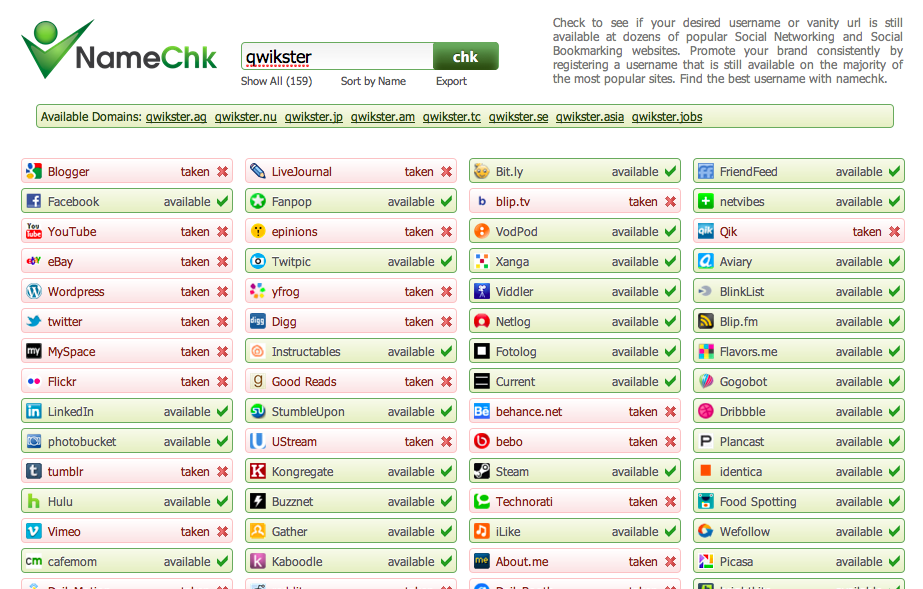
2. Claim your domain name(s), Facebook, Twitter, YouTube, etc. BEFORE you announce the rebrand.
Although no business seems to be using Qwikster, a few of the major social media accounts are already claimed by individuals. Twitter, often a first point of contact between a trademark and the public, bears the following profile pic:
Awesome pic? Yeah, kinda. But is it the image you want connected with your new business as you attempt to convince subscribers to accept not one, but two separate credit card payments each month? Doubtful. If Netflix’s plan is to buy this Twitter account (such a sale is prohibited by Twitter, by the way), I’ll suggest that it would have been accomplished much easier before making a rebrand announcement late on a Sunday night.
YouTube was claimed back in 1996 by an individual in Singapore. I bet somewhere in Singapore (set to overtake Vegas as the world’s second largest gambling hub) they’ve already started a pool on how long before his account is “reclaimed.”
Run a NameChk search before every rebrand…why wouldn’t you?
3. If you’re going to rebrand, then REBRAND!
Netflix is blowing my mind here in a whole different way than the Indianapolis Public Library rebrand. The CEO’s late Sunday night, meandering, apologetic blog post hints at the reasons for rebranding but certainly omits key details (drunkenness, plans for a future sale, etc.) As such, legions of current, loyal subscribers are stuck with the awful rebrand while prospective, future customers that don’t yet exist waltz away with the prominent Netflix mark (and NFLX stock quote).
Did I mention that each customer will now receive two credit card charges per month (one from Netflix, one from Qwikster) instead of just one? Somehow I suspect that benefits somebody (corporations are people, my friend!) other than the Netflix customer.
4. Always use a proper trademark notice (“TM” for common law rights).
Netflix/Qwikster isn’t using a proper trademark notice. Presumably because the CEO made this website late on a Sunday night and neglected to contact his trademark attorney before announcing a major rebrand.
5. When budget permits (ballpark $800-$1200), seek federal registration, thus allowing you to use the registration symbol, ®.
Netflix has the budget to be proactive about trademark protection but they certainly don’t appear to have acted wisely in this situation. There has been no federal trademark filing as of yet (even if Netflix won’t be using the Qwikster name for awhile, it should still file an intent-to-use application). I’m expecting there will be a Qwikster trademark application filed today or as soon as Netflix’s attorneys get to the office and realize what has happened. Otherwise, Netflix is playing fast and loose with trademark law in a way that can only come back to haunt it.
Thoughts? Like the new name? Hate it? Done with Netflix?
[UPDATE: Every rebrand should include a NameChk search. Hat tip to Chris Theisen.]
[UPDATE 10/10/11: Netflix Abandons Qwikster DVD Plan. I wonder if it was because they couldn’t get the Twitter account. Long live Netflix. Long live Qwikster.]




 watching discs from Netflix (2,091 movies rated). I’ve learned, laughed and loved with Netflix. I even used to own Netflix stock back during the days when I dabbled in the market. I’ve also been a bit of a Netflix evangelist at times as the company fought off Blockbuster and Redbox.