The U.S. Copyright Office publishes processing-time data twice a year. For claims closed between April 1 and September 30, 2026, the average across all claims was 4.1 months. Fully electronic applications with an uploaded digital deposit and no examiner correspondence – the largest category – averaged 3.4 months, with a range of 1.2 to 5.5 months. Claims that required correspondence averaged 5.3 months. Applications with physical deposits or paper filings take longer on average.
The effective date of registration is not the date the certificate arrives. It is the date the Office receives a complete application, the required deposit, and the filing fee in acceptable form. That date is fixed once those three elements are in hand. Subsequent correspondence or examination time does not move it.
Under Fourth Estate Public Benefit Corp. v. Wall-Street.com, LLC, a copyright owner of a U.S. work generally cannot file a federal infringement suit until the Office has acted on the application. The processing-time numbers therefore affect when a suit can be filed, not when copyright protection itself begins. Protection attaches upon fixation. Registration is a precondition for most statutory remedies in federal court.
Special Handling remains available when a registration is needed for pending or prospective litigation, customs enforcement, or a contractual deadline. It requires a written explanation of the urgency and an additional fee. The broader Copyright Office fee schedule increases take effect November 11, 2026.
For Indiana photographers, designers, and businesses, the practical points are straightforward. File as early as possible if litigation is a realistic possibility. Respond fully and promptly to any examiner correspondence. Keep records of the filing date. The certificate will arrive later; the effective date does not.
Stay tuned for new Indiana copyright and trademark lawsuits.
As a trademark attorney, I almost always notice whether a company is using the federal registration symbol, ®. From time to time I look the mark up, and there is no registration. Sometimes there is not even an application.
That was the opening of the 2019 version of this post. The rule has not changed, but the mix-ups have gotten more creative.
You may use the ® symbol with a trademark only after the United States Patent and Trademark Office has issued a registration for that mark. Not after you file. Not after the application publishes. Not after an examining attorney issues a notice of allowance. After registration.
Using ® before that can get you into trouble. Knowing and willful misuse can be treated as an attempt to deceive consumers and can support a fraud theory. The USPTO has long said that honest confusion is more common than actual fraud. That is not a license to keep using it anyway.
What the Office still lists as “we hear this a lot”
TMEP §906.02, Improper Use of Registration Symbol, still recognizes the potential for misunderstandings in use of the registration symbol. Here are some common explanations that do not, by themselves, prove fraud:
the printer did not get instructions, or ignored them;
believing that an Indiana state registration, or a foreign registration, authorizes the federal symbol;
the registration covers only part of the brand block on the label;
the registration covers other goods, not these goods;
the registration expired or was cancelled and nobody took the ® off the packaging;
another registered mark on the same label is what the symbol was supposed to refer to.
If your facts sound like one of those, fix the artwork. Do not panic.
TM, SM, and ® are not interchangeable
TM means “we claim this as a trademark.” You can use it on an unregistered mark, a pending application, or a common-law use. It is a claim, not a government seal.
SM is the same idea for services.
® means “the USPTO has registered this mark.” It is the only one of the three that requires a live federal registration.
Putting ® on a website footer because the logo “looks official” is how this post keeps getting rewritten.
State registrations do not get you a ®
Indiana will register a trademark through the Secretary of State. That filing has a place. It is not a federal registration. It does not authorize use of the federal symbol. It does not give you nationwide constructive notice. It does not mean the USPTO agrees the mark is clear.
A business can hold an Indiana registration, a pending federal application, and common-law rights in a couple of counties at the same time. Only the federal registration – once it issues – supports ®. The other two support TM or SM, if you want a notice symbol at all.
This blog has already watched local fights where a same-day state filing and a federal application showed up in the same week. Different offices. Different rights. One symbol.
The registration has a scope. The symbol has to follow it.
A registration is for particular goods or services in particular classes. If you are registered for “restaurant services” and you start selling branded hot sauce, the sauce is not registered because the restaurant is. Use TM on the sauce until that class is actually on a certificate.
The same problem shows up in the other direction. The word mark is registered. The new logo is not. Or the logo is registered and the tagline is not. Or the registration lapsed last year and the corrugated box still has ® molded into it.
Look at the certificate. Then look at the thing in the customer’s hand. If they do not match, take the ® off the thing in the customer’s hand.
Pending, allowed, published – still no ®
A serial number is not a registration number. A notice of publication is not a registration. A notice of allowance on an intent-to-use application is not a registration. You still have to file a statement of use, survive examination of that statement, and wait for the certificate.
Intent-to-use applicants are frequent offenders. The mark is sitting in a pitch deck with ® already applied because “we filed.” You filed. You have not registered.
What to do instead
Use TM or SM until the registration issues. When it issues, put ® next to the mark as it appears in the registration, on the goods or services listed in the registration. If you have a house mark registered and a product name that is not, only the house mark gets the ®.
If a registration dies – cancelled, expired, surrendered – the symbol comes off. That includes leftover packaging, the Google Business profile, the email signature, and the sign by the highway.
If you are not sure whether the registration covers a use, that is a clearance question, not a typesetting question. The 2026 fee edition of Should You Register Your Trademark? is the companion piece on whether to file. This one is only about the little R.
Stay tuned for the usual copyright and trademark docket notes.
The Federal Trade Commission will examine consumer protection issues related to video game loot boxes at a public workshop on August 7, 2019, in Washington, DC. Loot boxes are in-game rewards that contain a random assortment of virtual items (loot) to assist a player advance in the online game or to customize his or her game avatar.
The workshop, titled “Inside the Game: Unlocking the Consumer Issues Surrounding Loot Boxes,” will bring together a variety of stakeholders, including industry representatives, consumer advocates, trade associations, academics, and government officials to discuss concerns regarding the marketing and use of loot boxes and other in-game purchases, and the potential behavioral impact of these virtual rewards on young consumers.
The workshop is expected to address the following topics:
A look at the in-game transaction landscape, including the origins and evolution of loot boxes and their role in game play and the digital marketplace;
Research examining consumer behavior, including child and adolescent behavior, in the context of video games and digital transactions; and
A discussion of consumer awareness and education about in-game digital transactions, including the mechanics, marketing, and financial commitments associated with loot boxes.
The workshop, which is free and open to the public, will be at the Constitution Center, 400 7th St., SW, Washington, D.C., and will be webcast live starting at 9:00 AM.
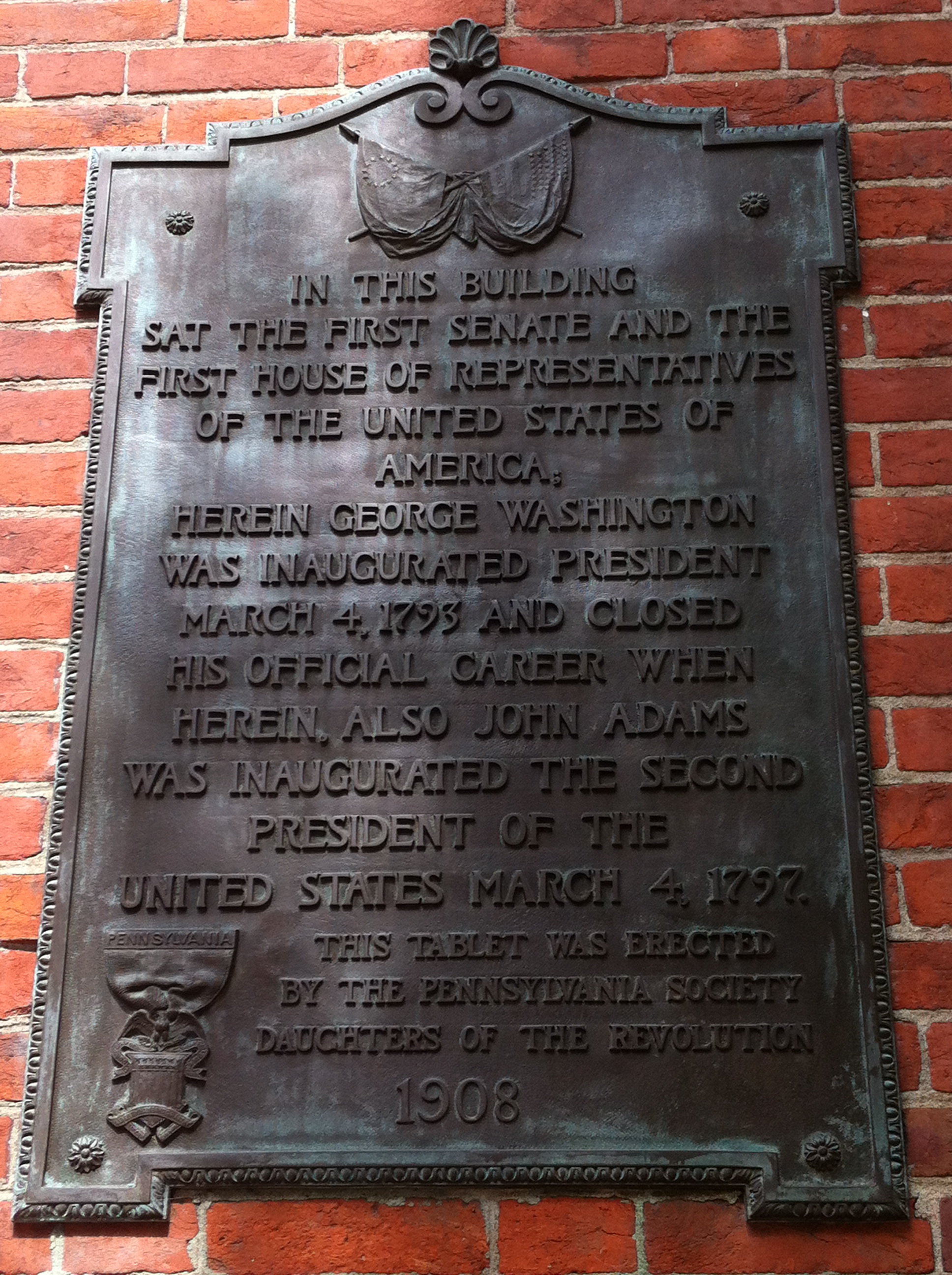
I spent this week in Philadelphia, the City of Brotherly Love. It was my first visit and I have to say the place is top-rate. Some of the best museums you can imagine and the C-SPAN junkie in me was absolutely thrilled to walk inside Congress Hall, location of the first U.S. House and Senate from 1790-1800. But just because I’m out sightseeing doesn’t mean the news stops. Here are the top stories I followed this week:
A mid-week election saw Richard Mourdock topple long-standing Republican Senator Richard Lugar. Has anybody bothered to ask Mourdock or (Democrat rival) Joe Donnelly’s thoughts on legislation like CISPA and SNOPA? Not this week, when all the talk was about Zuckerberg’s hoodie and President Obama’s evolution on same-sex marriage.
“All of my friends who have younger siblings who are going to college or high school – my number one piece of advice is: You should learn how to program.” – Mark Zuckerberg