• Home
  • About
  • Contact
  • Disclaimer

Indiana Intellectual Property Blog

~ Trademark and Copyright Law Updates in Indiana

Indiana Intellectual Property Blog

Category Archives: Social Media

Five Trademark Concerns When Rebranding: Netflix – Qwikster Edition

19 Monday Sep 2011

Posted by Kenan Farrell in Branding, Intellectual Property, Social Media, Trademark

≈ 3 Comments

Tags

Indianapolis Public Library, Netflix, Qwikster, Rebrand, Trademark

I woke this morning to learn that Netflix’s CEO had decided to fall on his own sword and rebrand Netflix’s DVD-by-mail feature (otherwise known as Netflix’s primary feature or the feature that made Netflix all of it’s money) to…wait for it…Qwikster. After a botched price hike this summer that alienated hundreds of thousands of subscribers, Netflix has decided to stick it’s thumb in the eye of all remaining loyal DVD-to-mail subscribers by leaving them with the new, unimproved Qwikster. I picture the captain of a luxury cruiser herding his passengers into old lifeboats, setting them adrift in the ocean and then cruising off smirking with the dinner buffet all to himself. Presumably, this is an effort to sell off the DVD-by-mail business and position Netflix to sail into a future of downloaded content without being encumbered by a logistically-difficult “by-mail” business model.

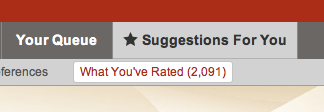
Full disclosure: I’ve been a Netflix fan since the beginning. I’ve spent more time than I care to calculate  watching discs from Netflix (2,091 movies rated). I’ve learned, laughed and loved with Netflix. I even used to own Netflix stock back during the days when I dabbled in the market. I’ve also been a bit of a Netflix evangelist at times as the company fought off Blockbuster and Redbox.
And now Netflix has given customers yet another reason to explore possible alternatives. Since I wrote a blog post about the Indianapolis Public Library’s rebrand a few weeks back, I thought it appropriate to analyze how Netflix’s rebrand meets the guidelines I set forth in that post.

1. At a bare minimum, do a Google search for similar trademarks already in use.

To Netflix’s credit, the Qwikster name seems to be relatively unencumbered from a trademark confusion perspective. There are 3 registrations for “Quickster” but in seemingly unrelated fields (Sports training equipment, namely, quick-assembly portable multi-sport practice nets; Jewelry, horological and chronometric instruments, namely, chronometers, watches and parts thereof; Telephone Indexes).

Of course, it could be that it’s such an awful name that every business with any marketing sense has stayed away. That being said, availability of a trademark is an increasingly rare trait so Netflix may have jumped on the first available name on their list. Time will tell whether that’s a smart approach to rebranding. However, as Item 2 will discuss, while potentially available for use in commerce, the mark may not be as ready for marketing purposes as initially thought.

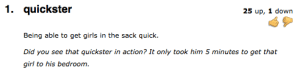
Also, somewhere else you should check…Urban Dictionary. Have you considered all public connotations before adopting a new trademark?
2. Claim your domain name(s), Facebook, Twitter, YouTube, etc. BEFORE you announce the rebrand.

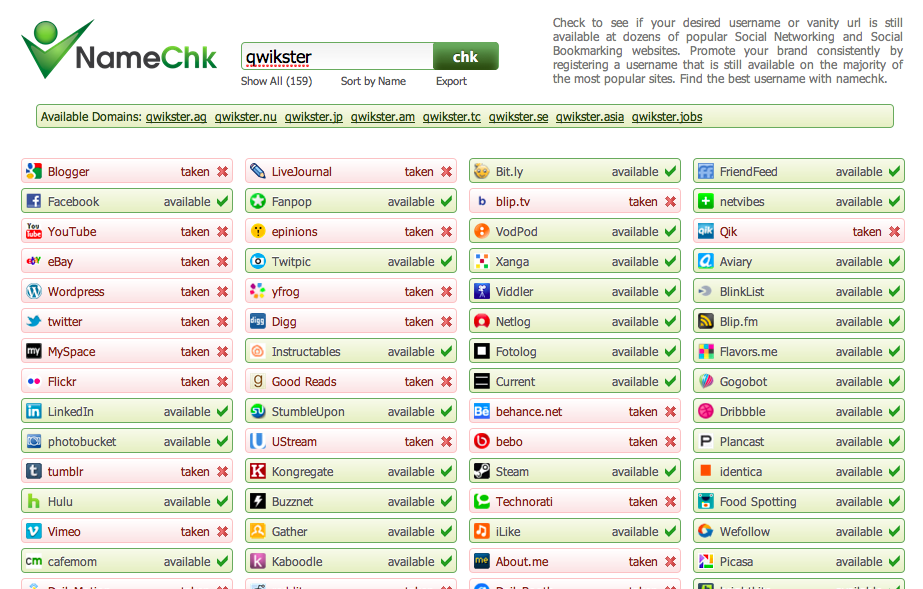
Although no business seems to be using Qwikster, a few of the major social media accounts are already claimed by individuals. Twitter, often a first point of contact between a trademark and the public, bears the following profile pic:

Awesome pic? Yeah, kinda. But is it the image you want connected with your new business as you attempt to convince subscribers to accept not one, but two separate credit card payments each month? Doubtful. If Netflix’s plan is to buy this Twitter account (such a sale is prohibited by Twitter, by the way), I’ll suggest that it would have been accomplished much easier before making a rebrand announcement late on a Sunday night.

YouTube was claimed back in 1996 by an individual in Singapore. I bet somewhere in Singapore (set to overtake Vegas as the world’s second largest gambling hub) they’ve already started a pool on how long before his account is “reclaimed.”

Run a NameChk search before every rebrand…why wouldn’t you?
3. If you’re going to rebrand, then REBRAND!

Netflix is blowing my mind here in a whole different way than the Indianapolis Public Library rebrand. The CEO’s late Sunday night, meandering, apologetic blog post hints at the reasons for rebranding but certainly omits key details (drunkenness, plans for a future sale, etc.) As such, legions of current, loyal subscribers are stuck with the awful rebrand while prospective, future customers that don’t yet exist waltz away with the prominent Netflix mark (and NFLX stock quote).

Did I mention that each customer will now receive two credit card charges per month (one from Netflix, one from Qwikster) instead of just one? Somehow I suspect that benefits somebody (corporations are people, my friend!) other than the Netflix customer.

4. Always use a proper trademark notice (“TM” for common law rights).

Netflix/Qwikster isn’t using a proper trademark notice. Presumably because the CEO made this website late on a Sunday night and neglected to contact his trademark attorney before announcing a major rebrand.

5. When budget permits (ballpark $800-$1200), seek federal registration, thus allowing you to use the registration symbol, ®.

Netflix has the budget to be proactive about trademark protection but they certainly don’t appear to have acted wisely in this situation. There has been no federal trademark filing as of yet (even if Netflix won’t be using the Qwikster name for awhile, it should still file an intent-to-use application). I’m expecting there will be a Qwikster trademark application filed today or as soon as Netflix’s attorneys get to the office and realize what has happened. Otherwise, Netflix is playing fast and loose with trademark law in a way that can only come back to haunt it.

Thoughts? Like the new name? Hate it? Done with Netflix?

[UPDATE: Every rebrand should include a NameChk search. Hat tip to Chris Theisen.]

[UPDATE 10/10/11: Netflix Abandons Qwikster DVD Plan. I wonder if it was because they couldn’t get the Twitter account. Long live Netflix. Long live Qwikster.]

Social Media Law – Presentation Video

18 Thursday Aug 2011

Posted by Kenan Farrell in Authors, Bloggers, Copyright, Defamation, Intellectual Property, Right of Publicity, Social Media, Tech Developments, Trademark

≈ Leave a comment

Tags

Richmond Social Media Group, Whitewater Community Television

Here’s the video from my July 8, 2011 presentation to the Richmond Social Media Group on social media law:

PCCU Presents Richmond Social July 8, 2011 from Richmond Social on Vimeo.

Thanks to PCCU and Whitewater Community Television for your help!

Businesses, Know thy Facebook Admin

10 Thursday Feb 2011

Posted by Kenan Farrell in Bloggers, Intellectual Property, Social Media

≈ Leave a comment

Tags

Facebook

The new Facebook Pages (which I personally think are a nice upgrade) just made the workplace social media equation a little more complicated. Pages now act and feel like personal profiles and your organization’s Page can now post updates directly on other Pages’ Walls. The upgrade could be great for B2B networking, but it also enhances legal risks to Page admins and their organizations.

New Page Example: After logging in and upgrading the Page, I switched my Facebook access over to control of the Vonnegut Library (just click “Use Facebook as Page” under “Account” and it gives you a full list of the pages you admin).

Then I went to Nuvo‘s wall and posted a message. (Thanks Nuvo!) Rather than posting as Kenan Farrell, I’m now able to post as the Vonnegut Library.  For comparison, I also posted an update on Nuvo’s wall the “ol’-fashion” way, by tagging Nuvo in a status update.

While controlling a Page, the Notifications will be your Page’s notifications rather than personal notifications. The Friend tab will be all the folks who’ve “Liked” your Page.

You can see on the right in the image above, under the list of Admins, “Use Facebook as Kenan.” Facebook has made it extremely easy to switch back and forth between personal and business identities.

This upgrade goes a long way toward allowing businesses* to communicate independently of a particular individual’s identity. No longer restricted to their own Walls, Pages can go forth throughout Facebook and spread their unique message. Pages now allow organizations to more directly have a unified, branded voice in Facebook politics:

My caution to businesses…know your Page admins. Don’t give your company’s bullhorn to someone with whom you’ve had no discussion about communication strategy. Make sure they understand what is and isn’t appropriate to be saying on behalf of the company. Make sure they understand proper usage of trademarks, both yours and those of 3rd parties.

Admins must be increasingly mindful of which account they are posting from, especially since it is now so easy to switch back and forth between personal and business accounts (or switch to another unrelated Page account. I manage 8 accounts myself…what might be appropriate for one Page may not be from another). Defamation, privacy and securities lawsuits await the casual admin who makes personal comments from a business Page. FTC and unfair competition lawsuits await those who make business comments from a personal account (e.g. false testimonials, unsolicited endorsements).

Related note: be sure to have a CEO, owner or some other key employee listed as an Admin. With all the recent news about companies losing their domain names to wayward IT staff, you want to be sure you have a stake in your organization’s Facebook Page.

What do you think of the new Facebook Pages? A business communications boon or a legal minefield?

(*I use the term “business” broadly above. Read it to include most anybody who has a Page they’re using to promote a product or service.)

Text of California “E-personation” Law

30 Thursday Dec 2010

Posted by Kenan Farrell in Legislation, Social Media

≈ Leave a comment

Tags

Impersonation, Sentate Bill 1411

California has an interesting social media-related law going into effect on Jan. 1. It seeks to prohibit certain acts of online impersonation. Is such a law necessary in Indiana? Can you think of some otherwise “legal” activities that might become criminal under this law?

Senate Bill 1411. Impersonation: Internet.

SECTION 1. Section 528.5 is added to the Penal Code, to read:

528.5. (a) Notwithstanding any other provision of law, any person who knowingly and without consent credibly impersonates another actual person through or on an Internet Web site or by other electronic means for purposes of harming, intimidating, threatening, or defrauding another person is guilty of a public offense punishable pursuant to subdivision (d).

(b) For purposes of this section, an impersonation is credible if another person would reasonably believe, or did reasonably believe, that the defendant was or is the person who was impersonated.

(c) For purposes of this section, “electronic means” shall include opening an e-mail account or an account or profile on a social networking Internet Web site in another person’s name.

(d) A violation of subdivision (a) is punishable by a fine not exceeding one thousand dollars ($1,000), or by imprisonment in a county jail not exceeding one year, or by both that fine and imprisonment.

(e) In addition to any other civil remedy available, a person who suffers damage or loss by reason of a violation of subdivision (a) may bring a civil action against the violator for compensatory damages and injunctive relief or other equitable relief pursuant to paragraphs (1), (2), (4), and (5) of subdivision (e) and subdivision (g) of Section 502.

(f) This section shall not preclude prosecution under any other law.

Here’s what the California government has to say about the new law:

View this document on Scribd

New FCC Net Neutrality rules

27 Monday Dec 2010

Posted by Kenan Farrell in Bloggers, Federal Initiatives, Intellectual Property, Legislation, Social Media, Tech Developments

≈ Leave a comment

The U.S. Federal Communications Commission  (“FCC”) voted Dec. 21 to adopt new network neutrality rules for broadband providers. The 194-page Report and Order will take some time to read with a critical eye so I’ll update once completed. Here is the full text for those who can’t wait:

View this document on Scribd
← Older posts
Newer posts →

Categories

  • Advertising Law (1)
  • Artists (23)
  • Authors (20)
  • Bloggers (37)
  • Branding (29)
  • Business Law (9)
  • Copyright (327)
  • Dear KLF Legal (4)
  • Defamation (5)
  • Entertainment Law (14)
  • Estate Law (2)
  • Family Law (2)
  • Fashion (5)
  • Federal Initiatives (33)
  • Indiana (603)
  • Indianapolis (51)
  • Intellectual Property (662)
  • Just for Fun (25)
  • KLF Legal (19)
  • Legislation (34)
  • Litigation (595)
  • Musicians (13)
  • Nonprofit (6)
  • Northern District of Indiana (215)
  • Patent (44)
  • Privacy (15)
  • Right of Publicity (8)
  • Social Media (56)
  • Southern District of Indiana (369)
  • Stories from the Week that Was (42)
  • Supreme Court (13)
  • Tech Developments (119)
  • Trade Dress (26)
  • Trade Secret (15)
  • Trademark (363)
  • What I'm Reading (8)

Bloggers Copyright Federal Initiatives Indiana Indianapolis Intellectual Property Legislation Litigation Northern District of Indiana Patent Social Media Southern District of Indiana Stories from the Week that Was Tech Developments Trademark

Blog at WordPress.com.

  • Subscribe Subscribed
    • Indiana Intellectual Property Blog
    • Join 81 other subscribers
    • Already have a WordPress.com account? Log in now.
    • Indiana Intellectual Property Blog
    • Subscribe Subscribed
    • Sign up
    • Log in
    • Report this content
    • View site in Reader
    • Manage subscriptions
    • Collapse this bar
 

Loading Comments...