• Home
  • About
  • Contact
  • Disclaimer

Indiana Intellectual Property Blog

~ Trademark and Copyright Law Updates in Indiana

Indiana Intellectual Property Blog

Category Archives: Trade Secret

Indiana Trade Secret Litigation Update – Forest River Inc. v. Heartland Recreational Vehicles LLC

05 Tuesday Oct 2010

Posted by Kenan Farrell in Indiana, Intellectual Property, Litigation, Northern District of Indiana, Trade Secret

≈ Leave a comment

Tags

Christopher A. Nuechterlein, Jon E. DeGuilio, Litigation Update, Trademark Infringement, Unfair Competition

Forest River Inc. v. Heartland Recreational Vehicles LLC

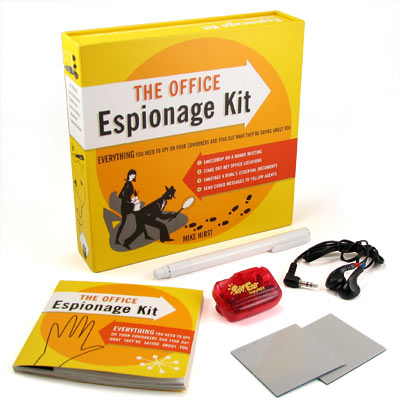
This lawsuit is the fourth pending matter between these parties. The lawsuit revolves around the alleged theft of a company’s full client/contact list. High-tech computer espionage? No. The “sales person then contacted a personal friend of his who was a sales employee at [Plaintiff] and asked that sales employee to get him a copy of the Master List.” D’oh.

Companies, do you have a trade secret policy and the proper mechanisms in place to protect your valuable, confidential information? If not, I can tell you it costs a lot less than a trade secret lawsuit.

Court Case Number: 3:10-cv-00409-JED-CAN
File Date: Wednesday, September 29, 2010
Plaintiff: Forest River Inc.
Plaintiff Counsel: Ryan M. Fountain of Law Offices of Ryan M. Fountain
Defendant: Heartland Recreational Vehicles LLC
Cause: Computer Fraud and Abuse, Unfair Competition, Tortious Interference, Conspiracy to Commit Criminal Mischief, Trademark Infringement
Court: Northern District of Indiana
Judge: Judge Jon E. DeGuilio
Referred To: Magistrate Judge Christopher A. Nuechterlein

View this document on Scribd

Indiana scientist accused of stealing trade secrets

20 Monday Sep 2010

Posted by Kenan Farrell in Indiana, Indianapolis, Intellectual Property, Litigation, Trade Secret

≈ Leave a comment

Companies, are you protecting your valuable trade secrets? When was the last time you revisited your trade secret policy? A cautionary tale…Indianapolis-based Dow AgroSciences was recently the victim of an alleged “patient and calculated” plan to “drain” the company of technology that took 20 years to develop.

A former Indiana scientist accused of illegally sending trade secrets worth $300 million to China and Germany was ordered detained Tuesday on rare charges of economic espionage.

A federal indictment unsealed in Indianapolis alleges that 45-year-old Kexue Huang, who was born in China, passed on proprietary information about the development of organic pesticides to Hunan Normal University while he worked as a researcher for Dow AgroSciences in Indiana from 2003 to 2008.

Assistant U.S. Attorney Cynthia Ridgeway said Huang, a Canadian citizen with permanent U.S. resident status, used a “patient and calculated” plan to “drain” the Indianapolis-based company of technology that took 20 years to develop.

The indictment alleges that Huang published a paper in China about the organic pesticides and also directed students at Hunan Normal in further research.

Source: Associated Press (August 31, 2010)

For more information on protecting your valuable trade secrets: Creating a Trade Secret Policy

Happy World Intellectual Property Day!!!

26 Monday Apr 2010

Posted by Kenan Farrell in Copyright, Intellectual Property, Patent, Trade Secret, Trademark

≈ Leave a comment

Tags

WIPO

Most people are aware of intellectual property (IP) – of copyright, patents, industrial designs and trademarks.  But many still view these as business or legal concepts with little relevance to their own lives.  To address this gap, WIPO’s Member States decided in 2000 to designate an annual World Intellectual Property Day.  They chose April 26, the date on which the Convention establishing WIPO originally entered into force in 1970.

Each year, WIPO and its Member States celebrate World Intellectual Property Day with activities, events and campaigns. These seek to increase public understanding of what IP really means, and to demonstrate how the IP system fosters not only music, arts and entertainments, but also all the products and technological innovations that help to shape our world.

The aims of World IP Day are:

  • to raise awareness of how patents, copyright, trademarks and designs impact on daily life;
  • to increase understanding of how protecting IP rights helps promote creativity and innovation;
  • to celebrate creativity, and the contribution made by creators and innovators to the development of societies across the globe;
  • to encourage respect for the IP rights of others.

Greatest invention? The toilet snorkel.

For more info and suggested activities, see WIPO.

Oregon Court Grants Indiana Corporation's Motion To Stay In Non-Compete Matter

12 Wednesday Aug 2009

Posted by Kenan Farrell in Litigation, Trade Secret

≈ Leave a comment

Source: Robert Milligan and summer associate Alana Friedman of Seyfarth Shaw LLP

guidantlogo

A federal district court in Oregon recently granted a motion to stay in a dual-state non-compete matter based on the first-to-file rule, even though the two cases were filed only a few hours apart. The first-to-file rule provides that, when similar cases have been filed in different federal district courts, it is within the court’s discretion to dismiss the second filed action when it involves the same parties and issues.

In Biotronik, Inc. v. Guidance Sales Corp., 2009 WL 1838322 (D. Or. Jun. 22, 2009), Judge King of the United States District Court for the District of Oregon granted Guidant Sales Corporation’s (“GSC”) motion to stay against GSC’s competitor, Biotronik, Inc (“Biotronik”).  The court granted the motion to stay based on the first-to-file rule.  Id. at *3.

Biotronik and GSC are competitors in the distribution of cardiac rhythm management devices such as pacemakers and defibrillators. Biotronik is an Oregon corporation and GSC is an Indiana corporation with its principal place of business in Minnesota.

logo_biotronik

On April 10, 2009, twelve GSC employees ended their employment at GSC and began working at Biotronik. The employees signed agreements with GSC containing non-compete, non-solicit, and non-disclosure provisions. The agreements contained Minnesota forum and choice of law provisions.

On April 14, 2009, at approximately 12:26 p.m PDT, GSC filed suit in the United States District Court for the District of Minnesota seeking damages from Biotronik and the twelve defecting employees for allegedly breaching their employment agreements. GSC also alleged several employees breached their duty of loyalty as well as their non-disclosure and non-solicitation agreements. GSC further alleged that Biotronik tortiously interfered with GSC’s contract with its employees and aided and abetted the employees’ breach of their duty of loyalty to GSC. Finally, GSC sought a declaration that its non-compete agreement with each of the twelve employees was valid and enforceable and that Minnesota law applies.

Later that same day, Biotronik filed suit in Oregon state court at approximately 5:11 p.m. PDT (Biotronik apparently e-mailed the complaint to GSC at 3:42 p.m. PDT in advance of the filing). Biotronik sought a declaration that the twelve employees, and one additional former GSC employee also working for Biotronik, were in compliance with all of the “enforceable” restrictive covenants contained in the agreements they signed while employed by GSC. The former employees were not named parties to the action. The case was later removed to the federal district court in Oregon and assigned to Judge King.

On April 29, 2009, the Minnesota federal court entered a stipulated temporary restraining order and order for expedited discovery. The TRO required Biotronik to return confidential information and prohibited Biotronik from inducing the employees to solicit other GSC employees to leave. The employees were also prohibited from disclosing or retaining confidential information and soliciting current GSC employees to leave.

GSC then moved to have the federal case in Oregon dismissed or stayed under the first-to-file rule. The court found that the first-to-file rule was applicable because Biotronik and GSC are parties to both actions and the issues are substantially similar since both cases seek to determine the enforceability of the non-competition agreement. Id. at *2 (relying on Pacesetter Sys., Inc. v. Medtronic, Inc., 678 F. 2d 93, 94-95 (9th Cir. 1982)).

Although the court noted that rigid application of the first-to-file rule was not required, especially where the cases were filed only hours apart, it nevertheless chose to enforce the rule. The court provided two reasons as to why it was appropriate to grant the stay and allow the Minnesota case to proceed. Id. at *3. First, the Minnesota case would more thoroughly resolve the dispute because it involved more issues than the Oregon case. The court reasoned that Biotronik would still have to defend some of the charges in the Minnesota action even if the Oregon case proceeded. Second, the Minnesota action had progressed more quickly than the Oregon action since the parties in the Minnesota action had already agreed to a temporary restraining order and discovery had already begun. Id. The court also noted that Biotronik had not relied on any of the exceptions of the first-to-file rule, such as bad faith, anticipatory suit, and forum shopping. Id.(citing Alltrade, Inc. v. Uniweld Prods., Inc., 946 F.2d 622, 628 (9th Cir. 1991)) (emphasis added).

The court summed up its decision by stating that, “[i]n short, application of the first-to-file rule will promote the interest of judicial economy and avoid the possibility of conflicting judgments.” Id.

The case serves an important reminder that, depending upon the circumstances, filing suit first can make a difference when it comes to enforcing non-competition and non-solicitation covenants against former employees and their new employers, and vice versa. However, where there is demonstrated evidence of forum shopping, the court may decline to apply the “first-filed” rule.

Creating a Trade Secret Policy

15 Monday Jun 2009

Posted by Kenan Farrell in Trade Secret

≈ Leave a comment

confidentialIntellectual property protection typically brings to mind the triumvirate of copyright, trademark and patent law.  However, not all of your valuable proprietary information will fall into these three categories.  Trade secret protection is an important alternative to understand as you shore up your intellectual property protection.

The precise language by which a trade secret is defined varies by jurisdiction, as do the particular types of information that are subject to trade secret protection. In Indiana, “trade secret” means information, including a formula, pattern, compilation, program, device, method, technique, or process, that: (1) derives independent economic value, actual or potential, from not being generally known to, and not being readily ascertainable by proper means by, other persons who can obtain economic value from its disclosure or use; and (2) is the subject of efforts that are reasonable under the circumstances to maintain its secrecy.  IC 24-2-3-2

Some common examples of business-related information that are subject to trade secret protection:

  • Customers’ identities
  • Marketing strategy
  • Price lists
  • Identities of suppliers
  • Budgets and resource allocations
  • Salaries

All of these types of information can give you a competitive business edge…so long as they don’t fall into the hands of your competitors.  In order to maintain your trade secrets, it’s often necessary to have in place a company trade secret policy.  Such a policy should include at least the following:

  • Have all employees, contractors, outside consultants or anyone else who may be exposed to sensitive information sign a confidentiality agreement.  Consider making it a part of your employment contracts.
  • Keep sensitive material locked in a safe place, accessible only to those on a “need-to-know” basis.
  • Limit the circulation of confidential documents.
  • Clearly designate confidential documents as SECRET or CONFIDENTIAL.
  • Periodically review your trade secret policy with employees.

Your company likely has valuable, confidential information that should be protected as a trade secret.  Consider consulting a trade secret professional to help your company establish a secure trade secret policy.

Newer posts →

Categories

  • Advertising Law (1)
  • Artists (23)
  • Authors (20)
  • Bloggers (37)
  • Branding (29)
  • Business Law (9)
  • Copyright (327)
  • Dear KLF Legal (4)
  • Defamation (5)
  • Entertainment Law (14)
  • Estate Law (2)
  • Family Law (2)
  • Fashion (5)
  • Federal Initiatives (33)
  • Indiana (603)
  • Indianapolis (51)
  • Intellectual Property (662)
  • Just for Fun (25)
  • KLF Legal (19)
  • Legislation (34)
  • Litigation (595)
  • Musicians (13)
  • Nonprofit (6)
  • Northern District of Indiana (215)
  • Patent (44)
  • Privacy (15)
  • Right of Publicity (8)
  • Social Media (56)
  • Southern District of Indiana (369)
  • Stories from the Week that Was (42)
  • Supreme Court (13)
  • Tech Developments (119)
  • Trade Dress (26)
  • Trade Secret (15)
  • Trademark (363)
  • What I'm Reading (8)

Bloggers Copyright Federal Initiatives Indiana Indianapolis Intellectual Property Legislation Litigation Northern District of Indiana Patent Social Media Southern District of Indiana Stories from the Week that Was Tech Developments Trademark

Blog at WordPress.com.

  • Subscribe Subscribed
    • Indiana Intellectual Property Blog
    • Join 81 other subscribers
    • Already have a WordPress.com account? Log in now.
    • Indiana Intellectual Property Blog
    • Subscribe Subscribed
    • Sign up
    • Log in
    • Report this content
    • View site in Reader
    • Manage subscriptions
    • Collapse this bar
 

Loading Comments...