Noble Roman’s is becoming a regular on this blog. It begs the question, why do they have so many intellectual property problems? Rather than dumping piles of money into back-end enforcement, perhaps they should spend more time on front-end due diligence and avoid many of these problems altogether. Given that most/all of the lawsuits involve ex-franchisees, perhaps Noble Roman’s should re-examine their franchise agreement or franchisee selection process. At least this lawsuit leaves out the ridiculous abandoned theft and conversion claims from their previous complaints.
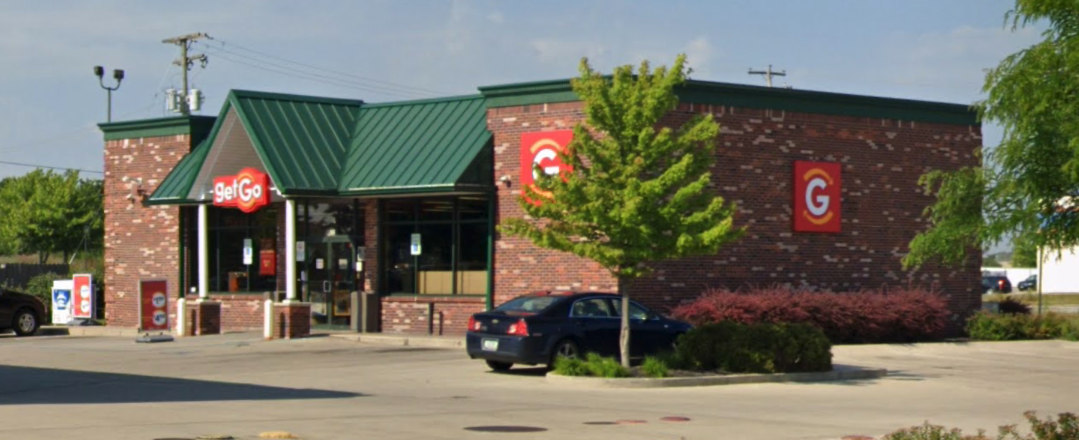
As with most of their previous lawsuits, Noble Roman’s is suing a prior franchisee for breach of their franchise agreement. Here, the Defendants, with gas station locations in Florida and Georgia, have allegedly not paid the required royalty, underreported sales figures, failed to make available all Noble Roman’s menu items, failed to maintain required business hours, and sold non-Noble Roman’s food offerings.
The Complaint was originally filed in Marion County Superior Circuit Court for Marion County, Indiana but Defendants’ counsel has filed a Notice of Removal to the Southern District of Indiana, Indianapolis Division. Defendants’ counsel is Donald E. Pinaud, Jr. of Jacksonville, Florida.
Stay tuned for updates.
Noble’s Roman’s, Inc. v. AMI Stores Management, Inc. et al.
Case Number: 1:21-cv-01539-RLY-TAB File Date: Sunday, June 6, 2021 Plaintiff: Noble Roman’s, Inc. Plaintiff Counsel: Jaime L. Meyer, Jeffrey D. Roberts of Hollingsworth Roberts Means LLC Defendant: AMI Stores Management, Inc., AMI 57 LLC d/b/a AMI 70 Food Mart, AMI 63 LLC d/b/a AMI 63 Food Mart Cause: Breach of Franchise Agreement, Trademark Infringement Court: Southern District of Indiana Judge: Richard L. Young Referred To: Tim A. Baker
The Plaintiff in this lawsuit is Sears Authorized Hometown Stores, LLC (“SAHS”), the licensor of Sears Hometown stores, which offer SAHS’s merchandise, such as major home appliances, for sale to the public on consignment from SAHS. For over 25 years, SAHS licensed a Sears Hometown store in Corydon, Indiana through dealership agreements with a series of independent dealers.
The Defendants are accused of using “their personal relationships with SAHS’s former dealer to block SAHS’s access to the market and open their own store, “Schneider’s Hometown,” at the same location as the former Sears Hometown store. Defendants are now unfairly trading off SAHS’s name and goodwill in the Corydon market.”
The Complaint (below) details the history between the original Corydon SAHS store and the Defendants, including the actions of the Defendants in abandoning their own dealer agreement.
The Defendants are also accused of using a sign designed to be confusingly similar to the sign used to designate a Sears Hometown store, including using the same font and color scheme. The interior of the Defendants’ store allegedly uses the same trade dress and fixtures used in SAHS’s branding programs, including, but not limited to, the paint colors and trim and vinyl plank wood flooring. The Defendants also continue to use the same phone number from the SAHS store.
Stay tuned for updates.
Sears Authorized Hometown Stores, LLC v. Lynn Retail, Inc. et al.
Case Number: 4:21-cv-00091-JMS-DML File Date: Friday, June 4, 2021 Plaintiff: Sears Authorized Hometown Stores, LLC Plaintiff Counsel: Michael W. Oyler of Furman Nilsen & Oyler, PLLC, Fredric A. Cohen, Allison R. Grow, Charles J. Hoover of Cheng Cohen LLC Defendant: Lynn Retail, Inc., Jerry Schneider, Laura Schneider Cause: Unfair Competition, Tortious Interference with Contract, Tortious Interference with Prospective Economic Advantage Court: Southern District of Indiana Judge: Jane Magnus-Stinson Referred To: Debra McVicker Lynch
In a very short Pro Se Complaint (below), a self-described “failed comedian” is seemingly alleging that legendary comedian Dave Chappelle saw him perform back in 2014-2015 and subsequently used a stolen joke in Chappelle’s Netflix comedy special released in March 2017.
Jokes can be copyrighted, but it’s very rare and “stealing” or “borrowing” jokes from other comedians is commonplace. Further, there’s no mention of copyright anywhere in the Complaint. Without a valid copyright registration, any potential copyright claim will go nowhere. As such, the lawsuit presumably could only proceed on the grounds of something like theft or conversion.
Under Illinois law, where the joke “stealing” allegedly occurred, a person commits theft by: (1) knowingly taking or obtaining control over another’s property, (2) without authorization (including using threats, using deception, or knowing it’s stolen), and (3) with intent to permanently deprive the owner of their property. Retelling a joke doesn’t deprive the original teller from continuing to tell the joke, so a theft claim is probably equally set for failure.
In Illinois, a Plaintiff seeking to prove conversion must establish: (1) they have a personal right to a specific piece of property; (2) they have an absolute and unconditional right to immediate possession of the personal property; (3) they made a demand for possession of the property currently possessed by the defendant; and (4) the defendant wrongfully assumed control of the plaintiff’s property. At least in the current iteration of the Complaint, these elements have not been established.
The Complaint provides only the following limited Statement of Claim:
“Between 2014-2015 while the Defendant was working on the movie “Chiraq” in Chicago, he saw the Plaintiff performing at one or more of the four places where comedy that were within 2 miles of the location the Defendants shoot location. Then knowingly used material from the Plaintiff in a standup special without permission.”
The Complaint doesn’t include the text of either the Plaintiff’s original joke or Chappelle’s allegedly infringing joke, other than mentioning that Chappelle’s joke “was exactly 1 minute.” There’s nothing to establish that the Plaintiff holds any right in any specific piece of property and is silent as to any demand for possession. As such, a conversion claim will likely also be unsuccessful.
The Plaintiff seeks $303,030.30 in damages, more than double the statutory maximum for copyright infringement.
“The Plaintiff is seeking $303,030.30 in relief. The Defendants was paid 20 Million for the special “Deep in the Heart of Texas” by Netflix which has a runtime of 66 mins, the joke was exactly 1 minute and 303,030.30 would be what the Defendant was paid per minute.
It’s not clear that the lawsuit should even be in Indiana as the alleged acts occurred in Illinois and Dave Chappelle lives in Ohio.
Unfortunately, the Plaintiff has already spent $402 filing this Complaint and now will need to spend even more to have it properly served on Chappelle. Without seriously upgrading the sparse information in the Complaint, it’s probably all just lost money. Since we didn’t even get a joke out of the entire Complaint, I’ll leave you with a humorous quote about pro se plaintiffs by arguably our best lawyer-president (who himself was self-taught in the law):
“He who serves as his own counsel has a fool for a lawyer and a jackass for a client.” Abraham Lincoln
Stay tuned for updates.
Gatewood v. Webber Chappelle
Case Number: 2:21-cv-00186-PPS-JEM File Date: Friday, June 4, 2021 Plaintiff: Xavier Gatewood Plaintiff Counsel: Pro Se Defendant: David Khari Webber Chappelle Cause: Nothing specific, possibly theft or conversion? Court: Northern District of Indiana Judge: Philip P. Simon Referred To: John E. Martin
Update 6/2/2021: I went to the grocery store today searching for Egg White Wraps and didn’t find any. Is this really a thing?
Here’s a fairly interesting trade dress lawsuit involving a food product I didn’t even know existed…egg white wraps. Apparently, egg white wraps were the “number one new product in dairy departments…in 2020” (see Complaint below). It begs the question, how many other new dairy products were released in 2020? Dairy product connoisseurs, please educate me in the comments below.
As general information, “trade dress” comprises the characteristics of the visual appearance of a product or its packaging that signify the source of the product to consumers. However, if trade dress is “functional,” meaning the characteristics are “essential to the use or purpose of the article or if it affects the cost or quality of the article,” it cannot serve as a trademark. See TMEP 1202.02(a).
The Plaintiff in this lawsuit, Egglife, is accusing the Defendant, Crepini, of adopting packaging that is too similar to their own egg white wrap packaging.
Here are the specific elements that the Plaintiff consider to be their own protectable trade dress:
a. Interwoven and overlapping shapes with rounded rather than squared edges that weave in and out of the front of the package
b. The interwoven and overlapping shapes with rounded rather than squared edges are comprised of different, yellow-based colors
c. Transparent center window with overlaid graphics
d. Prominent display of “egg white wraps” in the center of the transparent window in the center of the front of the package
e. Lowercase “egglife”brand straight across the upper quarter of the front of the package
f. Smaller arched text centered over the “egglife” brand near the top of the front of the package
g. All capitalized“KEEP REFRIGERATED” text at bottom of the front of the package
h. Lowercase “egglife”brand straight across the upper quarter of the front of the package
i. Smaller arched text centered over the “egglife” brand near the top of the front of the package
j. All capitalized “KEEP REFRIGERATED” text at bottom of the front of the package
As mentioned above, I’m certainly no expert on egg white wrap packaging, but I have been in a grocery store before, and some/most of the above characteristics seem pretty standard for all types of food products. Food marketers please weigh in below, but many of these characteristics seem almost necessary, i.e. functional, given the limited packaging size for a small food product.
However, the Complaint highlights frequent changes to the Defendant’s packaging from early 2018 up to the 2019 rebrand to the current allegedly infringing packaging, of which the Defendant’s packaging now supposedly copies the characteristics of Plaintiff’s packaging:
a. Interwoven and overlapping shapes with rounded rather than squared edges b. The interwoven and overlapping shapes with rounded rather than squared edges are comprised of nearly identical yellow-based colors c. Transparent center window with overlaid graphics d. Lower case brand straight across the upper quarter of the packaging e. Smaller arched text centered over the top of the brand near the top of the packaging f. Abandoned trademarked EGG THINS in favor of “egg wraps” g. Abandoned the long-used CREPINI Iand crown design trademark in favor of lowercase font across the top of the packaging h. Added “Keep Refrigerated” messaging in all capital letters to the bottom of the packaging
As an unsophisticated egg white wrap consumer, both packagings frankly appear to me just like many other packagings in a grocery store. I’m reminded of flour tortilla packaging. Due in large part to FDA labeling requirements, food producers/marketers have to pack a lot of functional information about a product into a very small space. The use of the colors yellow and white in connection with an egg product seem to be almost a requisite. A transparent center window allowing a consumer to examine the food product seems highly necessary.
The Complaint does include some very limited evidence of instances of actual confusion by Costco consumers posting on Facebook. Considering the type of people that feel a need to post on social media about their Costco purchases, I’m not sure whether I’d consider those to be “significant” instances of confusion. However, they do exist and add an extra wrinkle to the lawsuit and Crepini’s possible defenses and responsibility to avoid consumer confusion.
This trade dress lawsuit will be interesting to follow. Stay tuned for updates.
Egglife Foods, Inc. v. Crepini, LLC
Case Number: 3:21-cv-00388 File Date: Friday, May 28, 2021 Plaintiff: Egglife Foods, Inc. Plaintiff Counsel: Louis T. Perry, David R. Merritt of Faegre Drinker Biddle & Reath LLP Defendant: Crepini, LLC Cause: Trade Dress Infringement, False Designation of Origin, Common Law Unfair Competition, Deception Court: Northern District of Indiana Judge: Jon E. DeGuilio Referred To: Michael G. Gotsch, Sr.
This is the second lawsuit filed by an energy drink company in a week!
The Plaintiff, Monster Energy Company, brings this lawsuit after several years of unsuccessful direct communications with the Defendant attempting to seek voluntary compliance with their asserted trademark rights.
Anybody who’s been to a gas station or watched the X Games will recognize the Monster “Claw Icon” logo, an “M-shaped claw design with jagged or irregular contours designed to evoke a claw having torn through the can or other material.” The Complaint (below) claims that Monster brand drinks are the best-selling energy drink in the United States. In October 2020, Monster was named the 4th Most Marketed Brand in Sports.
The Defendant, Bear KompleX, sells fitness equipment such as hand grips, weight belts, compression sleeves, and weight belts. They utilize a “Bear Claw” logo (not the donut) which looks like a slash (not the rocker) from a five-fingered bear paw. Bear KompleX’s logo often appears in various colors, including sometimes green and black.
Monster first contacted Bear KompleX in August 2019 demanding that they stop selling a “Grip, Calicure, & Doc Spartan Monster Bundle.” Later that month, Monster sent another letter warning Bear KompleX not to use a green claw mark. The Defendant apparently responded over the subsequent year by expanding its product offerings bearing a green claw mark, seemingly taunting Monster to take legal action.
That legal action has now been taken by Monster, and I’ll be looking forward to seeing Bear KompleX’s Answer. The Complaint asserts only a likelihood of confusion and no actual instances of confusion, so we can expect the Defendant to argue against any likelihood of confusion. They can point to differences between the logos, such as the Bear KompleX logo having five slashes, versus Monster’s three, and their bear claw facing upward rather than downward.
Stay tuned for updates.
Monster Energy Company v. R&R Medical, LLC d/b/a Bear KompleX
Case Number: 2:21-cv-00179-PPS-JPK File Date: Wednesday, May 26, 2021 Plaintiff: Monster Energy Corporation Plaintiff Counsel: James W. Riley, Jr., Jaclyn M. Flint of Riley Bennett Egloff LLP Defendant: R&R Medical d/b/a Bear KompleX Cause: Trademark Infringement, Trade Dress Infringement, False Designation of Origin, Federal Dilution, State Unfair Competition Court: Northern District of Indiana Judge: Philip P. Simon Referred To: Joshua P. Kolar