• Home
  • About
  • Contact
  • Disclaimer

Indiana Intellectual Property Blog

~ Trademark and Copyright Law Updates in Indiana

Indiana Intellectual Property Blog

Category Archives: Authors

A Legal Primer for Bloggers – Defamation

25 Friday Sep 2009

Posted by Kenan Farrell in Authors, Bloggers, Defamation, Indiana, Social Media, Tech Developments

≈ Leave a comment

A Legal Primer for Bloggers, Part 3 – Defamation

This post continues a series dealing specifically with the legal issues that bloggers should be thinking about.  Part 3, Defamation, will explore your options when somebody has posted something false and damaging about you, including some common defenses.
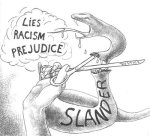
slander

Consider the following scenarios: You’re out surfing the internet one day and come across a false and damaging statement that someone has written about you on their blog or website.  Maybe you’re the one writing a scathing review about a new hit movie, including unsavory stories about its lead actress.   Or maybe you wrote a glowing review but someone else leaves a libelous comment to your post.  In all of these situations, you’ll want to be aware of your rights and obligations under defamation law.  Don’t think so? Check out this recent case where a blogger was sued for defamation by a Chinese game developer for his critical review of their product.

What is defamation?

Generally speaking, defamation is the issuance of a false statement about another person, which causes that person to suffer harm. Slander involves spoken defamatory statements. Libel involves the making of defamatory statements in a printed or fixed medium, such as a newspaper, book or blog.

Defamation laws vary from state to state.  Indiana has the following laws:

IC 34-15-1-1
Allegation; burden of proof

Sec. 1. In an action for libel or slander, it is sufficient to state generally that the defamatory matter published or spoken was about the plaintiff. If the defendant denies the allegation, the plaintiff must prove at trial the facts showing that the defamatory matter was published or spoken about the plaintiff.

IC 34-15-1-2
Truth; mitigating circumstances; evidence

Sec. 2. In an action for libel or slander, the defendant may allege:
(1) the truth of the matter charged as defamatory; and
(2) mitigating circumstances to reduce the damages;
and give either or both in evidence.

Indiana does have a retraction statute that provides protection from defamation lawsuits if the publisher retracts the allegedly defamatory statement according to prescribed guidelines. The retraction must be published within three days and in as conspicuous a place and type as the original item was transmitted. It’s important to note that retraction affects the calculation of damages, not liability.  Few courts have addressed retraction statutes with regard to online publications like blogs, but a Georgia court denied punitive damages based on the plaintiff’s failure to request a retraction for something posted on an Internet bulletin board.

IC 34-15-4-3
Retraction mitigates damages

Sec. 3. The plaintiff … may recover only actual damages if:
(1) it appears at the trial of the action that:
(A) the article was published or transmitted in good faith; and
(B) the falsity of the article was due to mistake or misapprehension of the facts;
(2) a full and fair retraction of a factual statement alleged to be false and defamatory was … transmitted to its members or subscribers by the news service.

What about defamatory statements that someone else makes in my comments?

The ability to comment on a blog is one of the key features of the blogosphere. Usually it promotes interactivity and civil discourse.  Of course, sometimes a comment will include defamatory statements.  Generally, anyone who repeats someone else’s statements is just as responsible for the defamatory content as the original speaker if they knew, or had reason to know, of the defamation.  That seemingly would put a very large burden on bloggers to carefully monitor and censor comments.  Fortunately, the Communications Decency Act, Section 230 provides a strong protection against liability for Internet “intermediaries” who provide or republish speech by others.

Section 230

(c) Protection for “Good Samaritan” blocking and screening of offensive material
(1) Treatment of publisher or speaker
No provider or user of an interactive computer service shall be treated as the publisher or speaker of any information provided by another information content provider.
(2) Civil liability
No provider or user of an interactive computer service shall be held liable on account of—
(A) any action voluntarily taken in good faith to restrict access to or availability of material that the provider or user considers to be obscene, lewd, lascivious, filthy, excessively violent, harassing, or otherwise objectionable, whether or not such material is constitutionally protected; or
(B) any action taken to enable or make available to information content providers or others the technical means to restrict access to material described in paragraph (1)

Are there any defenses to defamation?

Truth

truthTruth is an absolute defense to a defamation claim.  Defamation law does not prevent someone from publishing true information about you, no matter how damaging (although you might have a different cause of action).

Opinion

Opinions are not considered defamatory.  But make sure you’re actually stating an opinion and not asserting a statement of fact.  To determine whether a statement is an opinion, courts look at whether a reasonable reader or listener could understand the statement as asserting a statement of verifiable fact. (A verifiable fact is one capable of being proven true or false.) This is determined in light of the context of the statement. A few courts have said that statements made in the context of an Internet bulletin board or chat room are more likely to be opinions or hyperbole.  For a blog, a court would likely start with the general tenor, setting, and format of the blog, as well as the context of the links through which the user accessed the particular entry. Next the court would look at the specific context and content of the blog entry, analyzing the extent of figurative or hyperbolic language used and the reasonable expectations of the blog’s audience.

Public vs. Private

A private figure claiming defamation – your neighbor, your mom, the cute girl who works at the bar down the street – only has to prove you acted negligently, which is to say that a “reasonable person” would not have published the defamatory statement.  On the other hand, a public figure must show “actual malice” – that you published with either knowledge of falsity or in reckless disregard for the truth.  This is a much more difficult standard for a plaintiff to meet. A public figure is someone who has actively sought, in a given matter of public interest, to influence the resolution of the matter.  So a statement that is defamatory when made about your neighbor might not be defamatory if made about the lead actress in a new box office hit.

Practical Tip

Once you’ve concluded that someone has made a defamatory statement about you, what next?  Consider consulting an attorney to discuss your options.  But know that there are some very good reasons why actions for defamation may not be a good idea.  First, a defamation lawsuit can create a greater audience for the false statements than they previously enjoyed.  The media may cover the initial filing of a lawsuit and all the gory, illicity details of the complaint, but not follow through to the case’s ultimate resolution.  The net effect could be that large numbers of people hear the false allegations but never learn how the litigation was resolved.

Second, damage awards in defamation lawsuits tend to be small.  The fees expended in litigating even a successful defamation action can exceed the total recovery.  There’s often a substantial price to pay to clear your name in the court of law.

If you’re interested in learning more about this topic, check the Electronic Frontier Foundation’s FAQ on Online Defamation Law.

Next up in the series will be A Legal Primer for Bloggers – Anonymity.  It will discuss what you should know about blogging anonymously and keeping your identity secret, including the duty of your internet service provider to protect your identifying information.

A Legal Primer for Bloggers

Part 1: Introduction

Part 2: Intellectual Property

Part 3: DEFAMATION

Part 4: Anonymity

Part 5: Privacy

A Legal Primer for Bloggers – Intellectual Property

11 Friday Sep 2009

Posted by Kenan Farrell in Authors, Bloggers, Copyright, Intellectual Property, Social Media, Tech Developments, Trademark

≈ Leave a comment

A Legal Primer for Bloggers, Part 2 – Intellectual Property

This post continues a series dealing specifically with the legal issues that bloggers should be thinking about.  Part 2 will help you understand your rights to link to information or graphics from other sources, quote from articles and blogs, or otherwise use someone else’s copyrighted works.  It will also discuss the appropriate use of trademarks in blogs (both your marks and those of others).

I. Overview of Intellectual Property

What is copyright?

Copyright gives a creative person control over the use of an original work of authorship.  A copyright owner has the exclusive right to reproduce a work, prepare derivative works, distribute copies or perform a work publicly.  In the world of bloggers, original works of authorship can include text, images, audio or video creations (and a whole host of other things).

What is trademark?

A trademark is a distinctive sign or indicator used to identify that the products or services with which the trademark appears originate from a unique source, and to distinguish its products or services from those of other entities.

So think:

Pepsi®, McDonalds®, Apple®

Or:

pepsi logo mcdonalds apple logo

When you either hear/read the word mark or see the logo mark, you immediately associate that trademark with a particular product or service.  Obviously, these are examples of very strong trademarks.

II.  Copyright

Copyright issues start to come into play when you publish material created by others on your blog or, conversely, when someone else republishes material that you posted on your blog or website.

Copyright law applies to the reposting of text, images, audio and video.  If you’re posting somebody else’s original work, you’re likely violating one of the exclusive rights mentioned above. But as you, me and anyone else on the Internet knows, people are copy/pasting, hyperlinking and cross-referencing all over the world, all the time.  Are they all liable for copyright infringement? Luckily, the Copyright Act has a built-in exception called “fair use” that allows you to use other people’s copyrighted works for certain, enumerated purposes.  These include criticism, comment, news reporting, teaching, scholarship or research.  So, for example, if you are commenting on or criticizing an item that someone else has posted, and use a quote from that source, that’s probably fair use.

The following factors are considered in a fair use analysis:

  1. the purpose and character of the use, including whether such use is of a commercial nature or is for nonprofit educational purposes;
  2. the nature of the copyrighted work;
  3. the amount and substantiality of the portion used in relation to the copyrighted work as a whole; and
  4. the effect of the use upon the potential market for or value of the copyrighted work.

Keep in mind that the law favors “transformative” use.  In other words, if you’re reposting another person’s original work, it’s more likely to be fair use if you’re using that work in a different manner or for a different purpose than the original.  While you may borrow directly from another source, adding your own commentary and content is better than strict copying.  Likewise, it’s better to repost only a small portion of someone else’s work than the work in its entirety.

If you feel that you’ve gone too far in your copying, you probably have.  Consider whether you’re able to share the same information but in a different way (i.e. your own words).  If you can’t, that’s strong evidence it’s a fair use.  Don’t worry if you’re confused…this is a gray area in copyright law that isn’t totally clear to anyone at the moment.  If you have specific questions about your use of someone else’s creative works or someone else is using your works, contact a copyright professional (who should be well-versed on legal developments and what typically constitutes fair use) to provide a more detailed analysis.

Also, on a practical note, if you’re using someone else’s text or images and they contact you to ask you to remove them, you probably just want to go ahead and do it.  After all, there are lots of different ways to express an idea and usually hundreds of equally wonderful pictures to adorn your blog.  On the other side, if you find someone else using your text or images, take a deep breath before contacting them and remember what Barney says about sharing:

III. Trademark

Let’s talk first about your own trademarks.  Often you’ll have spent good time and money developing and protecting your trademarks.  It would be a shame to lose your rights through improper use.  Proper use enhances a mark’s ability to identify the origin of products or services, and minimizes the likelihood that a mark will become generic, or be abandoned unintentionally.  Make sure you always use a proper trademark notice (™ for common law rights, ® if you’ve obtained registration) and remember to use your trademark as an adjective. Escalator was once a registered trademark but rights were lost when everyone started using the term as a noun to describe just any ol’ moving stairway.  The mark no longer brought to mind its owner as the single origin of the product.

It’s probably just as common that you’ll post someone else’s trademark…I know this blog, as a news and information source, posts 3rd-party trademarks fairly regularly.  This is typically permissible, because while trademark law prevents you from using someone else’s trademark to sell your competing products, it doesn’t stop you from using the trademark to refer to the trademark owner or its products. That is called “nominative fair use,” and is permitted if using the trademark is necessary to identify the products, services, or company you’re talking about, and you don’t use the mark to suggest the company endorses you.  Again, bloggers get by on an exception to the rule…we are living in a gray legal realm.  Consult a trademark professional if you’re concerned about your use of somebody else’s trademark.

trademarknotice

The next post in the series will be A Legal Primer for Bloggers: Defamation.  The post will explore your options when somebody has posted something false and damaging about you, including some common defenses.  Until next time, sticks and stones, my friends!

A Legal Primer for Bloggers

Part 1: Introduction

Part 2: INTELLECTUAL PROPERTY

Part 3: Defamation

Part 4: Anonymity

Part 5: Privacy

A Legal Primer for Bloggers – Introduction

01 Tuesday Sep 2009

Posted by Kenan Farrell in Authors, Bloggers, Indiana, Intellectual Property, Social Media, Tech Developments

≈ Leave a comment

blogindianaI recently attended Blog Indiana 2009, a 3-day blogging and social media conference that aimed to promote education, innovation and collaboration among Indiana’s fast-growing blogging community.  The conference was very informative and had an extraordinary turnout.  However, despite all the great information we were getting, it became clear that a lot of legal issues were going unanswered (or un-asked).  Being the only attorney in the packed room, that wasn’t totally surprising.  However, knowing that these issues are important for every blogger to at least consider, I’ve decided to prepare a series of posts dealing specifically with the legal issues that bloggers should be thinking about.

My idea to write these posts was reinforced last week when news came out about a recent case where a court granted a plaintiff’s request to force Google to reveal the e-mail address and IP address of an anonymous blogger who allegedly defamed the plaintiff.  Clearly a big hit against anonymous blogging…more on that in a future post.

EFF-logo-transFirst things first, if you want the ultimate source for information on bloggers’ rights, check out the Electronic Frontier Foundation’s (“EFF”) excellent FAQ series.  If you’re a blogger and not yet familiar with EFF, you should be.  After all, they’ve been doing you a world of good for the last two decades.  Quick intro…the Electronic Frontier Foundation is an international non-profit advocacy and legal organization dedicated to preserving the right to freedom of speech in the context of today’s digital age.  I have several friends over at EFF and they’re all top-notch people with top-notch legal minds doing top-notch legal work.  ‘Nuff said about that.  On with the info that you want:

Bloggers’ Legal Issues

Bloggers, while hailing from a variety of political, economic and social backgrounds, all have one thing in common…they’ve got something to say.  From cake recipes to motherhood to Indiana Intellectual Property updates, the constant is that bloggers have something to say, often regardless of the size or stature of their audience.  Blogs have provided a great forum for publishing directly to an interested public.  As such, a blogger needs to consider the same legal issues as anyone making a widely-available publication.  Specifically, the astute blogger will want to at least be familiar with:

  • Intellectual Property (Copyright, Trademark)
  • Defamation (Truth as Defense, Public v. Private Figures)
  • Anonymity (First Amendment Protection, Subpoenas)
  • Privacy (Publication of Private Information, “Newsworthy” Information)

Keep in mind that laws vary from state to state.

While the Constitution and federal laws, such as copyright law, apply nationwide, many laws that affect bloggers vary from state to state. For example, defamation and privacy laws are defined by each state.  This blog series will focus on Indiana’s laws, but bloggers should consider checking the law of their jurisdiction (or ask an attorney to look into it for you.)

What about those crazy comments?

Generally, you have a First Amendment right to publish your blog in the way that you want, which includes the right to choose who may participate in discussions on your blog.  That means you’re able to delete comments that are offensive or off-topic.  But always be conscientious when removing someone else’s voice from the dialogue…with great power comes great responsibility.

With that general introduction out of the way, the next post in the series will be: A Legal Primer for Bloggers: Intellectual Property.  The post will help you understand your rights to link to information or graphics from other sources, quote from articles and blogs, or otherwise use someone else’s copyrighted works.  It will also discuss the appropriate use of trademarks in blogs (both yours and 3rd-party marks).

More on EFF – EFF is a donor-funded nonprofit and depends on your support to continue successfully defending your digital rights. Litigation is particularly expensive; two-thirds of EFF’s budget comes from individual donors, so every contribution is critical to helping EFF fight — and win — more cases.  Want to know how EFF has already helped?  EFF has taken action in several ways; it provides or funds legal defense in court, defends individuals and new technologies from the chilling effects of what it considers baseless or misdirected legal threats, provides guidance to the government and courts, organizes political action and mass mailings, supports some new technologies which it believes preserve personal freedoms, maintains a database and web sites of related news and information, monitors and challenges potential legislation that it believes would infringe on personal liberties and fair use, and solicits a list of what it considers patent abuses with intentions to defeat those that it considers without merit.

A Legal Primer for Bloggers

Part 1: INTRODUCTION

Part 2: Intellectual Property

Part 3: Defamation

Part 4: Anonymity

Part 5: Privacy

What I’m Reading – The World Is Open: How Web Technology is Revolutionizing Education

25 Tuesday Aug 2009

Posted by Kenan Farrell in Authors, Indiana, Tech Developments, What I'm Reading

≈ Leave a comment

On top of all the blogs, law journals, and case updates that I read each day, I also make sure to set aside time to read one Intellectual Property or Tech law book each month.  When I find a book that might be useful for clients, I post it:

worldisopenThe World Is Open: How Web Technology is Revolutionizing Education by Curtis J. Bonk, a professor of instructional systems technology at Indiana University.

Technology is changing higher education in more ways than can be counted. Distance education has become common. Leading universities are putting course materials or even entire courses online — free. The Obama plan for community colleges envisions free online courses that could be used nationwide. Professor Bonk surveys this landscape in this new book.

Click here for a full interview w/ Prof. Bonk discussing such topics as the “open” educational movement, online courses, anger at wikis and the future of higher education.

Resources for Authors

04 Tuesday Aug 2009

Posted by Kenan Farrell in Authors, KLF Legal

≈ Leave a comment

As a primer for my upcoming workshop for authors, I’ll be writing a series of blog posts geared toward the wordsmiths among us.  To start things off, here’s a list of helpful online writing resources:

  1. Writer’s Digest – the No. 1 magazine for writers, celebrating the writing life and what it means to be a writer in today’s publishing environment.
  2. American Society of Journalists and Authors – the nation’s leading organization of independent nonfiction writers.
  3. The Author’s Guild – the nation’s leading advocate for writers’ interests in effective copyright protection, fair contracts and free expression since it was founded as the Authors League of America in 1912.
  4. National Writers Union – the union for freelance writers working in US markets.
  5. Poets and Writers, Inc. – the primary source of information, support, and guidance for creative writers, and the publisher of Poets & Writers Magazine.
  6. Author’s Coaching Network – online social network for authors.

And I’ll finish with a nod to my favorite author, Indianapolis-native Kurt Vonnegut, Jr., who left us too soon in 2007.  So it goes.

Vonnegut

Newer posts →

Categories

  • Advertising Law (1)
  • Artists (23)
  • Authors (20)
  • Bloggers (37)
  • Branding (29)
  • Business Law (9)
  • Copyright (327)
  • Dear KLF Legal (4)
  • Defamation (5)
  • Entertainment Law (14)
  • Estate Law (2)
  • Family Law (2)
  • Fashion (5)
  • Federal Initiatives (33)
  • Indiana (603)
  • Indianapolis (51)
  • Intellectual Property (662)
  • Just for Fun (25)
  • KLF Legal (19)
  • Legislation (34)
  • Litigation (595)
  • Musicians (13)
  • Nonprofit (6)
  • Northern District of Indiana (215)
  • Patent (44)
  • Privacy (15)
  • Right of Publicity (8)
  • Social Media (56)
  • Southern District of Indiana (369)
  • Stories from the Week that Was (42)
  • Supreme Court (13)
  • Tech Developments (119)
  • Trade Dress (26)
  • Trade Secret (15)
  • Trademark (363)
  • What I'm Reading (8)

Bloggers Copyright Federal Initiatives Indiana Indianapolis Intellectual Property Legislation Litigation Northern District of Indiana Patent Social Media Southern District of Indiana Stories from the Week that Was Tech Developments Trademark

Blog at WordPress.com.

  • Subscribe Subscribed
    • Indiana Intellectual Property Blog
    • Join 82 other subscribers
    • Already have a WordPress.com account? Log in now.
    • Indiana Intellectual Property Blog
    • Subscribe Subscribed
    • Sign up
    • Log in
    • Report this content
    • View site in Reader
    • Manage subscriptions
    • Collapse this bar
 

Loading Comments...